Space junk is hard to completely avoid when satellites can only carry so much fuel, but that might not be a problem for much longer. Northrop Grumman and NASA are launching a "first-of-its-kind" refueling vessel, the Mission Extension Vehicle, aboard a Russian rocket on October 9th. The inaugural MEV-1 will dock with an Intelsat satellite in three months' time and provide life-extending services over five years. After that, it should be free to help other satellites -- it'll still have 10 years' worth of fuel.
A second spacecraft, MEV-2, will help another Intelsat satellite in 2020 and should have the same amount of leftover fuel. Both MEVs are flexible, too. They can dock with 80 percent of current geostationary satellites, even if they weren't designed for servicing.
If the MEV program ramps up, NASA could buy its services going forward. The agency is working on its own in-orbit service tech, such as refueling for satellites in low-Earth orbit.
Refueling vehicles like this could be vital going forward. They'd reduce the need for replacement satellites, of course, but they could also enable missions that wouldn't be practical with existing satellite lifespans. Scientists could conduct longer-term studies, for instance. While satellites ideally wouldn't need fuel in the first place, this is one step closer to making them more sustainable.
All products recommended by Engadget are selected by our editorial team, independent of our parent company. Some of our stories include affiliate links. If you buy something through one of these links, we may earn an affiliate commission.
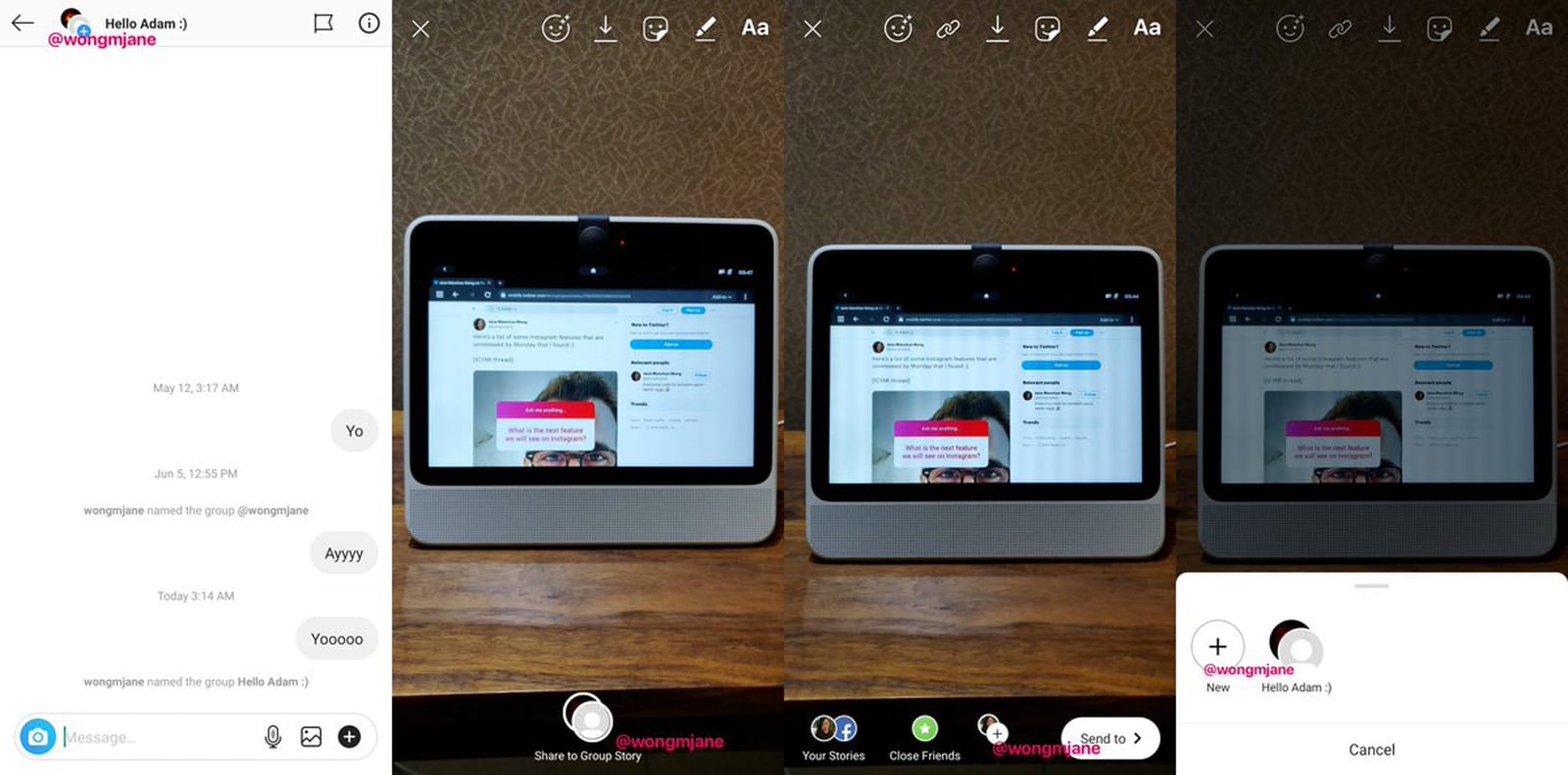
Facebook might not be giving up on Group Stories just because it's cutting them from its main app. App sleuther Jane Manchun Wong has found test code for a Group Story feature in Instagram. There's no mystery to how it works -- you'd just choose to "share to Group Story." Still, it could be helpful for those moments when you'd like to recap your adventures for a smaller social circle beyond those you've marked as Close Friends.
Like other tests, there's no guarantee this will make the cut. That's particularly relevant given the fate of the equivalent feature in Facebook. However, it might stand a better chance of survival in Instagram. Simply put, Stories are more of a staple here than they are in Facebook -- it makes more sense to include them in this app. It helps that Instagram already has Story stickers that directly link to group chats.
All products recommended by Engadget are selected by our editorial team, independent of our parent company. Some of our stories include affiliate links. If you buy something through one of these links, we may earn an affiliate commission.
Consumer Reports has updated its smartphone rankings with the new iPhone 11, iPhone 11 Pro, and iPhone 11 Pro Max. This year, the iPhone 11 Pro models are able to edge out competition from Samsung, while the iPhone 11 ranks in the top 10.
Ecobee HomeKit Thermostat
For the iPhone 11 Pro and iPhone 11 Pro Max, Consumer Reports praises the battery life improvements. In testing, the organization says the iPhone 11 Pro Max was able to run 40.5 hours, which is “a big turnaround” compared to the iPhone XS Max that latest 29.5 hours. Meanwhile, the iPhone 11 Pro lasted 34 hours, while the iPhone 11 ran for 27.5 hours.
Here’s how Consumer Reports tests smartphone battery life:
To find out how long a phone’s battery can go, Consumer Reports uses a robotic finger programmed to put the phone through a range of tasks designed to simulate a consumer’s average day. The robot browses the internet, takes pictures, uses GPS navigation, and, of course, makes phone calls.
What about camera quality? Consumer Reports doesn’t go into much detail here, but says that the devices earned “some of the highest scores” in these categories. For rear image quality, all three iPhone 11 models earned “very good” ratings, which puts them in line with the competition.
Our testers say the 11 Pro and 11 Pro Max notched some of the highest scores in our ratings for still-image quality. The iPhone 11 also earned a Very Good score in this category. And all three phones received an Excellent rating for rear-video quality.
Apple also says the iPhone 11 series feature improved durability. All three phones survived a water resistance test, but the iPhone 11 Pro couldn’t make it through a durability test:
The tumbler is a rotating chamber that repeatedly drops a phone from a height of about 2.5 feet. The phone is checked for damage after 50 drops and then again after 100. The goal is to expose it to impacts from a wide variety of angles.In
the case of the iPhone 11 and 11 Pro Max, the phones we tested made it through all 100 drops with just minor scratches. But when we checked the iPhone 11 Pro after 50 drops, we found that its display was broken and not working. A second sample also broke.
Ultimately, Consumer Reports rated the iPhone 11 Pro Max at an overall score of 95, followed by the iPhone 11 Pro at 92. The iPhone 11 earned an overall score of 89, putting it in eighth place overall.
Microsoft's Surface Duo is more than just a phone.
Microsoft
When Microsoft announced its return to making its own phones on Wednesday, offering its first take on smartphones since its $7 billion purchase of Nokia went up in smoke four years ago, the software giant said a lot of the things you'd expect. It talked about how its new dual-screen Surface Duo device, coming next year, would make us more productive. The device's dual 5.6-inch screens, whose price we don't yet know, would more effortlessly blend the computer and phone worlds.
"We think of these not just as products, but the beginning of a new category, dual-screen computing," Yusuf Mehdi, corporate vice president for Microsoft's modern life, search and devices group, said in an interview. "We're in the beginning of a new wave of innovation."
But that magical device wasn't going to be powered by some variant of Microsoft's monopoly-making Windows software, which runs on nearly 8 out of every 10 computers around the world. Instead, the Surface Duo would be powered by Google's Android, the world's most popular mobile operating system which runs on three out of every four phones.
Now playing:Watch this:
Samsung Galaxy Fold, Microsoft Surface Duo and the future...
8:18
"If you're going to have a device that fits in your pocket, and you can do phone calls and you want to run apps ... it made sense for us to choose" Android, Mehdi said.
With that, Microsoft acknowledged what we've seen for years. The once vibrant mobile software market of a decade ago, with devices powered by software from Nokia, BlackBerry, Danger, Palm and Microsoft has been decimated by Apple and Google. The only real competitors to Android and Apple's iOS left are side projects like Tizen from Samsung, which still relies on Android in its flagship phones. There's also HarmonyOS, a last-ditch effort from Chinese tech giant Huawei to ease reliance on Google's American-made software.
Microsoft's move to Android may not be as surprising, because it makes sense. Android is even more widely used in the tech world than even Microsoft's Windows, according to data from Statcounter's data, which shows that Android overtook Windows in May.
"It shows Microsoft being smart -- going and competing where they think they can compete" like with a camera app, email and search, said Carolina Milanesi, an analyst at Creative Strategies. "There's a lot going for them at the moment."
Long time coming
Microsoft, which became one of the most popular companies on the planet because of its software, has been building up to this moment for half a decade.
The signs started showing in 2014, when Microsoft announced free-to-download versions of its popular Office (Word, Excel, PowerPoint) software for Apple and Google-powered devices. Microsoft made its move shortly after naming Satya Nadellaits new CEO. He's staked his career on tearing down the company's once-toxic corporate culture and abandoning the old corporate ethos that everything it cared about ran Windows.
"You join here not to be cool, but to make others cool," Nadella said in an interview last year. "It's the result that matters."
Over the last few years, Microsoft's made further strides particularly with Android. One app, Your Phone, mirrors information from an Android phone to a Windows PC, allowing people to drag and drop photos to sync between them, respond to text messages on the computer and even control the phone from your computer.
As Microsoft was working on those efforts, in 2015 it admitted the buyout of Nokia was essentially worthless a year after paying for it, and cut 7,800 positions.
"We are moving from a strategy to grow a standalone phone business to a strategy to grow and create a vibrant Windows ecosystem that includes our first-party device family," Nadella said at the time.
Microsoft was praised for Windows Phone's unusual design. But it never could attract many app developers.
Dave Cheng/CNET
What he didn't say was how poorly Microsoft's well-regarded Windows Phone software actually sold. Windows Phone was released in 2010 as a touchscreen-capable followup to Windows CE from 1996 and Windows Mobile in 2000, both of which were designed for pen-based pocket computers.
With Windows Phone, Microsoft had a do-over, offering a wholly different design from Apple and Google. One example: Microsoft's departure from the typical rows of apps we see on a typical home screen. Windows Phone instead had boxes with app icons that moved up and down to reveal glimpses of information (like news headlines) running across them.
What Microsoft couldn't do was convince app developers to build for its phones in addition to Apple and Google.
"The app selection for Windows phone is still very limited," CNET's Andrew Hoyle wrote in a 2015 review of one of Microsoft's last phones. "I'd have to say that unless you're a die-hard Windows fan (and why would you be?) then you'd have a better mobile experience from Android or iOS."
Hoping to lead
Microsoft's Surface, with its keyboard cover, helped to change the way we think of tablets. Can Duo change the way we think of phones?
Sarah Tew/CNET
Microsoft's Surface-branded devices offer a chance for a restart.
The company's laptop and tablet designs are praised as innovative, for example. And Microsoft's efforts to expand into headphones scored a thumbs up from CNET's audio expert David Carnoy.
"This product brings together the absolute best of Microsoft, and we're partnering with Google to bring the absolute best of Android in one product," Microsoft Product Chief Panos Panay said of the Surface Duo during Wednesday's event. "This is industry-pushing technology."
Whether that turns out to be true will depend on what happens in the next year. Microsoft said its Surface Duo phone, and its larger non-phone cousin the Surface Neo, won't arrive until next year. It plans to use that time to work with app developers to create unique programs for the device.
"Microsoft is one of the only companies who has the resources to do this," said Patrick Moorhead, an analyst at Moor Insights & Strategy, who spoke to me from a Samsung Galaxy Fold phone he'd been using. He intends to grab a Surface Duo when it comes out next year too, in part because he believes it will help usher in a new class of dual-screen phones "It's the ability for it to be a decent experience is what they're offering," he added. "The Surface team has proven that they get it."
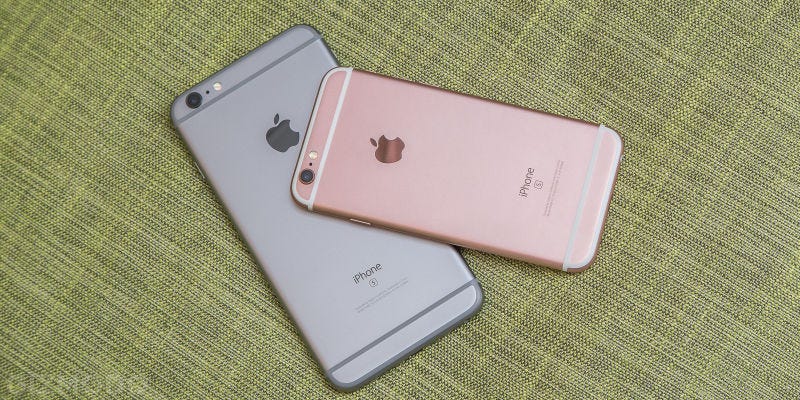
Another hardware issue has hit Apple, with a “no power” warning from the Cupertino giant that millions of users persisting with its iPhone 6 and iPhone 6s models may experience a hardware component failure, preventing the devices from switching on.
This follows issues with MacBook keyboards and batteries, as well as a number of security issues and hurried iOS upgrades, all of which makes for an awkward narrative for the world’s pre-eminent electronics manufacturer that badges itself on quality.
This latest issue hits later versions of the iPhone 6 and 6s models, those made between October 2018 and August 2019. Which, given the device dates back to 2014/2015, will reduce the impact significantly.
For any users hit by the issue, the company is offering a free repair program. If you’re heading in, you could be efficient and take your MacBooks with failed batteries and failed keyboards in at the same time.
The MacBook’s confidence-uninspiring hardware issues have removed some of the Apple sheen. The iOS issues have risked undermining user confidence in the safety and security of Apple devices over their competition. A hardware issue such as this, hitting the company’s cornerstone iPhones—especially ones so recently manufactured, is much worse and there will be serious supply chain investigations internally.
Apple says on its support site that the devices “may not power on due to a component that may fail—if you believe you have experienced this issue, please use the serial number checker below to see if your iPhone 6s or iPhone 6s Plus is eligible for repair, free of charge.
Users with an iPhone 6 or iPhone 6s can check their serial numbers here.
There is a catch though, Apple also warns that “if your iPhone has any damage which impairs the ability to complete the repair, such as a cracked screen, that issue will need to be resolved prior to the service.”
And that means you might need to pay for a costly screen repair to get a free hardware repair, just to get your iPhone to switch on—and that’s not good. Apple also warns that it may refuse the repair if you take your device to a store that’s not in the country where the device was purchased. And that could hit users travelling or who took advantage of cheaper device prices when overseas.
The free fix offer is valid for 24 months from time of purchase.
If you’re an Apple user who’s still rocking an iPhone 6s or 6s Plus and it suddenly started refusing to turn on, don’t worry: It’s Apple’s fault, not yours.
Apple blamed the issue on a component failure in a Friday blog post announcing a new repair program for the devices:
“Apple has determined that certain iPhone 6s and iPhone 6s Plus devices may not power on due to a component that may fail. This issue only affects devices within a limited serial number range that were manufactured between October 2018 to August 2019.”
Advertisement
The program’s page asks users to enter their phone’s serial number to check if it qualifies for a free repair. Eligible devices can be serviced at an Apple Store, an Apple Authorized Service Provider, or through a mail-in service with Apple Repair Center.
Now to be clear, this new program isn’t a catch-all tune-up for whatever problems your phone may already have. If it’s already sporting a busted screen or other damage that “impairs the ability” of Apple’s techs to fix this start-up issue, you could still end up getting a bill for those extra repairs.
Another caveat, because of course there’s more: This offer only covers 6s and 6s Plus phones for two years after first purchase, so time’s a’ ticking. Finally, if you’ve already paid to fix the problem yourself (after all, what kind of heathen survives without a phone these days) you may be eligible for a refund via Apple support.
After launching the iPhone 6s and 6s Plus in 2015, Apple quietly killed off the series last year, thus ending the last generation in the company’s numbered iPhone line to host a headphone jack. Enough users refusing to give up on that creature comfort may explain why the 6s and 6s Plus remain the oldest iPhones supported by Apple’s iOS13, according to Ars Technica. And why Apple is launching a new repair service for a four-year-old phone in the first place.