Jumat, 04 Oktober 2019

[Update: It’s dead] Watch this robot fold the Samsung Galaxy Fold until it dies - 9to5Google

Samsung’s Galaxy Fold is a fragile device thanks to its display, but Samsung takes pride in the strength of its hinge. The company claims it will last 200,000 folds before the hinge breaks. How long will it really last? Let’s watch a robot repeatedly fold the Galaxy Fold until it dies in real-time.

Nomad case for Pixel 3

CNET is livestreaming a Galaxy Fold torture test using a robot called “FoldBot,” which is built by SquareTrade. The robot quickly folds the phone over and over again — 150 times per minute — to see just how durable it is.

Samsung claims the Galaxy Fold will last around five years with 200,000 folds, but SquareTrade’s test was less than encouraging. After 10,000 folds, SquareTrade found no damage, but after about 18,000 folds there was some minor damage to the display. After hitting 40,000 folds, the device wasn’t properly working with its touchscreen, but it recovered after charging overnight. After 120,000 folds, the hinge function started to deteriorate.

Of course, the sheer speed of this machine is probably greatly accelerating issues with the hinge and the display. After all, it’s basically impossible for a human being to open and close the device this quickly.

Still, it should be fun to see how the Galaxy Fold will hold up in this test. You can tune in below on YouTube. At the time of writing, we’ve just passed 12,000 folds. How long do you think it will last?


Update 10/4: While it wasn’t on the stream for whatever reason, the Galaxy Fold being tested out here died at roughly 120,000 folds. Just like in SquareTrade’s test, the device’s hinge started to deteriorate and half of the inner folding display stopped working entirely. As noted earlier, though, this test greatly exaggerates how the average person would use their Galaxy Fold.


More on Galaxy Fold:


Check out 9to5Google on YouTube for more news:

Let's block ads! (Why?)


https://9to5google.com/2019/10/04/galaxy-fold-robot-test-video/

2019-10-04 12:48:00Z
52780399135458

Google found a serious Android flaw affecting Pixel, Samsung and Huawei phones - Engadget

Sponsored Links

Google researchers have discovered an unpatched vulnerability on its own Android OS that affect the Pixel 1 and 2, Huawei P20, Samsung Galaxy S7, S8, and S9 and other devices. It disclosed the problem just seven days after finding it, as the exploit is a "zero-day" that is already being exploited in the wild. Oddly, the bug -- which affects Android 8.x and later -- was discovered and patched in December 2017 on earlier versions of the OS. However, the fix was apparently not carried over to newer versions.

The exploit was discovered by Google's Project Zero team, and its Threat Analysis Group believes it was used in real-world attacks by Israel's NSO Group. That company has been implicated in the past in attacks on human rights and political activists.

Google said that the zero-day is not as dangerous as others in the past, as it "requires installation of a malicious application for potential exploitation," said an Android representative. That means it can't be triggered by a web browser or other app without additional exploits already in place.

Google has angered other tech companies in the past by revealing vulnerabilities before they're patched, but at least it's following its own guidelines here. The company said that it notified Android partners and made the patch available for the Android Common Kernel. "Pixel 3 and 3a devices are not vulnerable, while Pixel 1 and 2 devices will be receiving updates for this issue as part of the October update," the team added. Other devices affected are the Xioami Redmi 5A, Xiaomi Redmi Note 5, Xiaomi A1, Oppo A3 and the Moto Z3.

All products recommended by Engadget are selected by our editorial team, independent of our parent company. Some of our stories include affiliate links. If you buy something through one of these links, we may earn an affiliate commission.
Comment
Comments
Share
Tweet
Share
Save

Let's block ads! (Why?)


https://www.engadget.com/2019/10/04/google-zero-day-android-pixel-samsung-huawei/

2019-10-04 10:57:18Z
52780400098196

Apple reportedly raised production of iPhone 11 by 8 million units to meet strong sales demand - 9to5Mac

We have seen several signals that iPhone 11 sales are faring much better than the equivalent iPhone XS and iPhone XR sales period last year. Nikkei Asian Review is also reporting the same, quoting supply chain sources: ‘the autumn is so far much busier than we expected’.

Apple has apparently asked suppliers to increase production of the iPhone 11 by about 10%, which translates to an additional 8 million units.

Try Amazon Prime 30-Day Free Trial

Nikkei says that the increase in orders is mostly focused on the $699 iPhone 11 and the $999 iPhone 11 Pro, with production for the most expensive iPhone 11 Pro Max SKU revised down slightly.

The iPhone 11 has attracted buyers with an improved wide angle and new ultra-wide lens, upgraded chips and processors, a new back glass design, and a lower price point. Whereas the iPhone XR sold for $749 last year, the iPhone 11 starts at $699.

Due to sales weakness in the holiday quarter of 2018, the effective price of the iPhone XR fell as Apple adjusted prices in certain markets to stimulate sales.

The new $699 base price for the iPhone 11 seems to have hit the sweet spot of strong consumer interest without needing further price action. Of course, demand levels can change wildly as time goes on, so supply chain is still slightly wary of how long the peak production period will last, especially as the US-China trade war fears continue to loom over the smartphone market.

Apple has also incorporated several key software upgrades in its latest iOS 13 software, like a system swipe-to-type keyboard, Dark Mode and more. The big install base of iPhone 6 and iPhone 6 Plus owners may be motivated to upgrade this year, as their phones cannot update to iOS 13.

Apple is also looking to capture more of the market with a new less-expensive iPhone model to be introduced in the first quarter of 2020.

totallee clear case iphone 11

Check out 9to5Mac on YouTube for more Apple news:

Let's block ads! (Why?)


https://9to5mac.com/2019/10/04/iphone-11-production/

2019-10-04 10:25:00Z
52780400279399

[Update: Orange, more angles] First press renders of the Pixel 4 and 4 XL confirm what we already know - Android Police

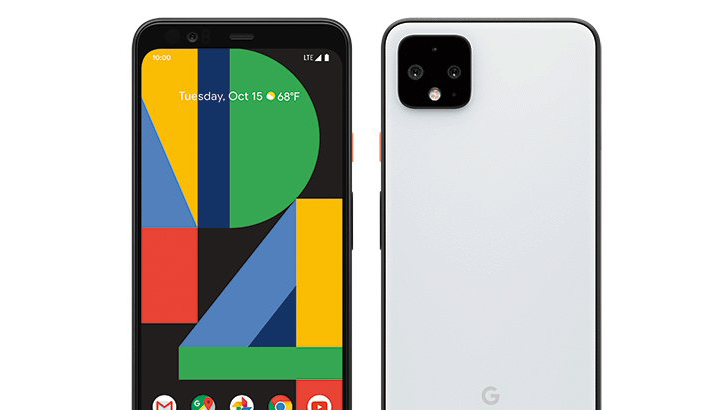
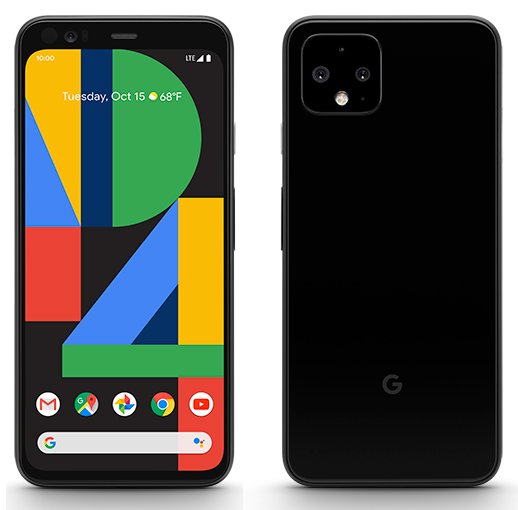
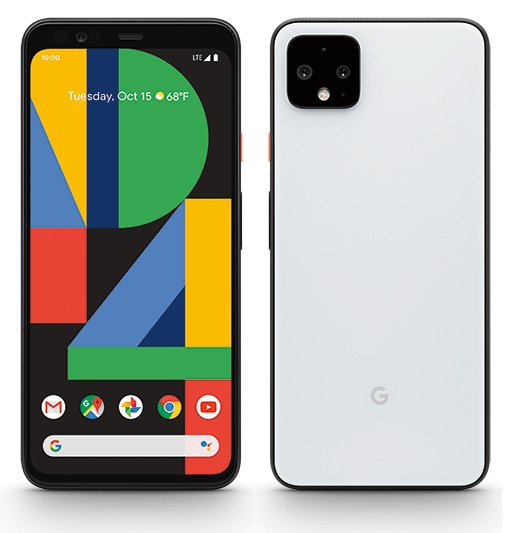
A recent leak showed the Pixel 4 XL from all its angles along with some of its notable aspects like the 90Hz Smooth Display and new face unlocking hardware. Now, a noted tipster, Evan Blass, has posted a couple of press images of the two 2019 Google flagships that add little to the already available information.

In two consecutive tweets, Blass shared press shots of the unannounced Pixel 4 and 4 XL. These photos aren’t to scale and make it rather difficult to identify the exact model when their size difference alone is considered — the device with a white back is actually the Pixel 4 XL. Both display their announcement date and time, and have the same wallpaper applied that doesn’t let you forget their name.

A few months ago, Google confirmed the presence of a Soli radar sensor in the top bezel that helps in hands-free gesture control. That broad forehead is also said to include a face recognition system akin to Apple’s implementation. Finally, Google’s fourth Pixel flagship will make the switch to a dual-camera setup that’ll be housed inside a square bump on its back.

Oh So Orange

Evan Blass has shared another render of the Pixel 4 XL in the coveted "Oh So Orange" color. I think Google nailed the color tone here: it's not too tame but not blindingly vibrant.

More angles

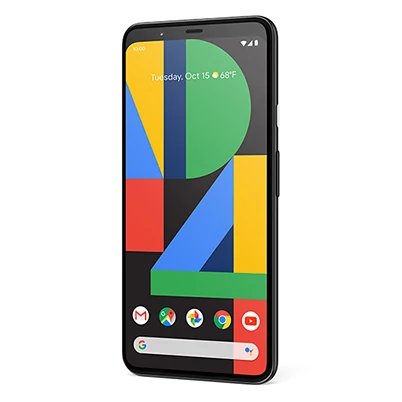
If these renders weren't enough for you and you'd rather see the Pixel 4 from even more angles, Max Weinbach has got you covered. You'll find the panda white Pixel 4 with its orange power button below as well as a render showing the new Assistant.

Let's block ads! (Why?)


https://www.androidpolice.com/2019/10/04/first-press-renders-of-the-pixel-4-and-4-xl-confirm-what-we-already-know/

2019-10-04 08:19:00Z
52780400231181

Apple raises iPhone 11 production by about 10%, Nikkei reports - CNBC

Tim Cook announces the iPhone 11 at a launch event in Cupertino, Calif on Sept. 10, 2019.

Source: Apple

Apple has asked suppliers to increase production of its iPhone 11 models by up to 8 million units, or about 10%, Nikkei Asian Review reported on Friday, citing better than expected demand.

"Previously, Apple was quite conservative about placing orders", which were less than for last year's new iPhone, said the Nikkei quoting a source.

"After the increase, prepared production volume for the iPhone 11 series will be higher compared to last year".

Sources cited by Nikkei said that the recent surge in iPhone orders is concentrated in the cheapest iPhone 11 model and the iPhone 11 Pro model, while Apple has slightly revised down orders for its top range model, the iPhone 11 Pro Max, which has a starting price of $1,099.

The newspaper also reported that suppliers remain cautious and said they were concerned that the higher level of orders would not be sustained.

"Demand is good for now. But we have to be careful not to be too optimistic," an executive-level source said in the report. "I hope that this year's peak season lasts longer than last year."

Apple did not respond to a Reuters request for comment outside regular U.S. business hours.

The company launched its three new iPhone models in September and reduced the starting price of the model upgrade, despite better cameras, to $699, compared to $749 for last year's iPhone XR.

Let's block ads! (Why?)


https://www.cnbc.com/2019/10/04/apple-raises-iphone-11-production-by-about-10-percent-nikkei-reports.html

2019-10-04 08:04:42Z
52780400279399

Apple raises iPhone 11 production by about 10%, Nikkei reports - CNBC

Tim Cook announces the iPhone 11 at a launch event in Cupertino, Calif on Sept. 10, 2019.

Source: Apple

Apple has asked suppliers to increase production of its iPhone 11 models by up to 8 million units, or about 10%, Nikkei Asian Review reported on Friday, citing better than expected demand.

"Previously, Apple was quite conservative about placing orders", which were less than for last year's new iPhone, said the Nikkei quoting a source.

"After the increase, prepared production volume for the iPhone 11 series will be higher compared to last year".

Sources cited by Nikkei said that the recent surge in iPhone orders is concentrated in the cheapest iPhone 11 model and the iPhone 11 Pro model, while Apple has slightly revised down orders for its top range model, the iPhone 11 Pro Max, which has a starting price of $1,099.

The newspaper also reported that suppliers remain cautious and said they were concerned that the higher level of orders would not be sustained.

"Demand is good for now. But we have to be careful not to be too optimistic," an executive-level source said in the report. "I hope that this year's peak season lasts longer than last year."

Apple did not respond to a Reuters request for comment outside regular U.S. business hours.

The company launched its three new iPhone models in September and reduced the starting price of the model upgrade, despite better cameras, to $699, compared to $749 for last year's iPhone XR.

Let's block ads! (Why?)


https://www.cnbc.com/2019/10/04/apple-raises-iphone-11-production-by-about-10-percent-nikkei-reports.html

2019-10-04 07:34:15Z
52780400279399

Apple increases production of iPhone 11: sources - Nikkei Asian Review

TAIPEI -- Apple has told suppliers to increase their production of its latest iPhone 11 range by up to 10%, or 8 million units, the Nikkei Asian Review has learned, following better-than-expected demand worldwide for its new cut-price handset.

The increase in orders appears to validate Apple CEO Tim Cook's new strategy of enticing budget-conscious consumers with cheaper models amid the weakening world economy. The order boost of between 7 million and 8 million units is equivalent to total annual phone shipments this year by Google, a rising iPhone rival in Apple's home U.S. market.

"This autumn is so far much busier than we expected," one source with direct knowledge of the situation said. "Previously, Apple was quite conservative about placing orders," which were less than for last year's new iPhone. "After the increase, prepared production volume for the iPhone 11 series will be higher compared to last year," the source said.

Shares of Apple component manufacturers rose in Japan after publication of the Nikkei report, outperforming the broader market. Japan’s Minebea Mitsumi closed up 3%, troubled iPhone screen maker Japan Display rose by almost 2%, while Murata Manufacturing and Alps Alpine also gained.

Apple launched its three new iPhone models -- the iPhone 11, 11 Pro, and 11 Pro Max -- in early September, and for the first time in its history reduced the starting price of the model upgrade, despite better cameras, to $699, compared to $749 for last year's iPhone XR.

Apple's new budget-conscious strategy came as the global smartphone market is expected to shrink overall for the third year running, according to research company IDC. In January, Cook acknowledged that "price is a factor" behind Apple's slowing sales, especially in emerging markets.

The recent surge in iPhone orders is concentrated in the cheapest iPhone 11 model and the iPhone 11 Pro model, sources said, while Apple has slightly revised down orders for its top of the range model, the iPhone 11 Pro Max, which has a starting price of $1,099.

Cook recently told German newspaper Bild that he could not be happier with the iPhone 11 launch and that its sales had enjoyed a "very strong start." Apple's share price has advanced nearly 40% this year and is now close to its October 2018 record high.

Nonetheless, suppliers remain cautious and said they were concerned that the higher level of orders would not be sustained.

"Demand is good for now. But we have to be careful not to be too optimistic," one executive-level source told the Nikkei. "I hope that this year's peak season lasts longer than last year."

One factor that may have helped boost demand temporarily is that Apple's iPhone 11 is still produced in China, and Washington has temporarily postponed a planned 10% tariff on China-made electronic imports. The delay in the tariff hike, from September to December 15, will help demand during the Thanksgiving and Christmas shopping seasons. Donald Trump has hardened his posture on trade talks with China, saying in September he did not want an interim truce.

Even so, the uptick in iPhone orders is a welcome change in recent fortunes for California-based Apple.

Last year, Apple asked key iPhone assemblers Foxconn, which formally trades as Hon Hai Precision Industry, and Pegatron to cancel additional production only weeks after the iPhone XR hit the shelves, as Nikkei Asian Review first reported in early November.

Then, this January, Apple made a rare move when it cut its quarterly sales forecast, blaming soft iPhone demand in China as its economy slowed.

A sustained rise in demand now would therefore counter the 2018 drop in iPhones sales -- the company's first since the iconic handset first launched in 2007.

"Apple's pricing strategy this year so far turns out to have boosted some initial sales and preorders. ... However, given the weakening world economy and uncertainties ahead, we are concerned whether the good demand will last long," said Chiu Shih-Fang, a veteran smartphone analyst at Taiwan Institute of Economic Research.

"Even if the second half is definitely better than the first half, we need to monitor if the lower average sale price could have an impact on Apple's total revenue."

Yasuo Nakane, head of global tech research at Mizuho Securities, said he had revised up 2019 iPhone production estimates to 194 million units from 178 million -- although that is still less than the 208.8 million iPhones sold in 2018.

All models in the iPhone 11 range have better cameras than last year's, and are equipped with facial recognition and wireless charging features similar to 2018.

Unlike rivals Samsung Electronics, Huawei Technologies, Xiaomi and Oppo, Apple did not introduce 5G compatibility, the next generation wireless communication standard that enables faster data transfer and low latency.

In the first half of 2019, Apple suffered a nearly 25% decline in iPhone shipments, compared to 2018, according to IDC -- far worse than its main rivals, Samsung Electronics and Huawei Technologies. The world's top two smartphone makers, respectively saw an almost 2% drop and a nearly 26% surge in shipments over the same period.

Apple declined to comment.

Additional reporting by Nikkei staff writer Yifan Yu

Let's block ads! (Why?)


https://asia.nikkei.com/Business/Technology/Apple-increases-production-of-iPhone-11-sources

2019-10-04 07:06:00Z
52780400279399