Rabu, 02 Oktober 2019

Huawei Phones Had Bootleg Access to Google Apps. Not Anymore - Yahoo Finance

(Bloomberg) -- One of Huawei Technologies Co.’s biggest trade war headaches has just gotten worse, as an unofficial workaround to the Trump administration ban on using Google apps and services has been quashed.

Security researcher John Wu published an illuminating post Tuesday that explained how users of Huawei’s Mate 30 Pro were able to manually download and install Google apps, despite a U.S. blacklisting that prohibits the Chinese company from using American components and software. The process allowed the Mate 30 Pro (along with the basic Mate 30) to run popular apps like Google Maps and Gmail that otherwise would not be permitted.

In the wake of Wu’s revelations, the Mate 30 devices lost their clearance to manually install Android apps, as reported by a number of smartphone experts. Only Google is able to make that kind of change through what’s known as its SafetyNet anti-abuse check.

“Although this ‘backdoor’ requires user interaction to be enabled, the installer app, which is signed with a special certificate from Huawei, was granted privileges nowhere to be found on standard Android systems,” Wu wrote on Medium.

Google declined to comment for this story.

An easy-to-use app enabling the installation of Google apps and services on the Mate 30 Pro, called LZPlay, had emerged alongside the device’s release, however it has disappeared after Wu’s posting. The researcher said in his findings that “it is pretty obvious that Huawei is well aware of this ‘LZPlay’ app, and explicitly allows its existence.”

Huawei said in an emailed statement it has had no involvement with LZPlay.

Huawei’s New Android Phone Lacks Luster Without Google Apps

Effectively, the change makes sure that the U.S. ban on Google services for the Mate 30 Pro is ironclad -- and many of the users outside of China who might have obtained or imported the device will now have only the bare Android-based Huawei user experience.

At the heart of Huawei’s problems is the Google Play Store, a system-level app that’s part of Google’s licensed bundle, which opens access to the full panoply of Android applications. With it on board, an Android device can more effectively compete with Apple Inc.’s iPhone and App Store, equipped with globally popular apps like YouTube, Instagram, Netflix and Spotify. Without it, no matter how great its specs and performance, an Android device is a tough sell for U.S. or European customers. The U.S. trade ban has been damaging to Huawei because it undercuts the company’s ability to compete in the premium smartphone market in Europe, which had been one of its growth drivers.

Huawei doesn’t have the same challenge in its native China because the government already bans most Google apps and services on all smartphones. Instead, Chinese users rely on Tencent Holdings Ltd.’s WeChat as the do-it-all super-app, plus a diversity of other sources for apps, games and entertainment, an ecosystem that’s developed in Google’s absence.

With the latest blow to the Mate 30 Pro, Huawei’s prospects for global smartphone sales dim even further.

(Updates with Huawei’s response in the 7th paragraph)

To contact the reporter on this story: Vlad Savov in Tokyo at vsavov5@bloomberg.net

To contact the editors responsible for this story: Edwin Chan at echan273@bloomberg.net, Peter Elstrom, Colum Murphy

For more articles like this, please visit us at bloomberg.com

©2019 Bloomberg L.P.

Let's block ads! (Why?)


https://finance.yahoo.com/news/huawei-phones-had-bootleg-access-034712259.html

2019-10-02 04:07:59Z
52780397092577

Selasa, 01 Oktober 2019

Sony halves price of PlayStation Now streaming games service to go up against Microsoft, Google - CNET

sony-e3-booth-2018-6628

Sony's slashing prices for its game streaming service.

Josh Miller/CNET

Sony isn't playing games with its PlayStation Now streaming games service. Starting Tuesday, the monthly price for the service will be cut in half, to $9.99 per month. Sony says it's taking the dramatic step in order to keep in line with competition.

The new price, which drops from the $19.99 per month it costs now, will be "comparable to other entertainment streaming services on the market," Sony said in a statement. 

While the move will likely be celebrated by subscribers, it offers yet another sign of how strongly companies are willing to compete to get our dollars. Streaming services have become all the rage, with all manner of companies offering TV, movies, music and, yes, even video games sent over the internet to your phone, laptop, tablet or console.

The popularity and ease of streaming technology has pushed a new generation of consumers drops cable bills, leading to a land grab effort by the likes of Netflix, Disney, Apple, Amazon, Google and even CNET parent CBS. 

Now playing: Watch this: PlayStation State of Play event reveals new console and...

1:57

To attract ever more people, prices have dropped steadily. Disney Plus, for example, will cost $7.99 per month when it launches later this year, offering access to more than a dozen new original shows in addition to back catalog of Disney, Pixar, Star Wars and Marvel films. Apple TV Plus, meanwhile, will charge $4.99 per month when it launches later this year, promising new shows from entertainment royalty like Jennifer Aniston, Reese Witherspoon, Steve Carell and Oprah Winfrey (not to mention, people who buy a new iPhone, iPad or Mac from the tech behemoth will get a year of Apple TV Plus for free).

While there are many streaming video and music services to choose from, Sony's PlayStation Now, which launched in 2014, has been one of the few gaming services available for years.

Part of that, industry executives say, is the higher cost of building and maintaining the ultra fast internet connections and powerful data centers capable of creating a game's intricate visuals, streaming them to a player, and then responding to button presses on a controller. Those costs helped to sink the early game streaming company OnLive, which shut down in 2015.

A new band of streaming services is starting up though, driven by falling costs of computer components and faster internet connections across around the world. They include Microsoft's Xbox team, which will begin testing its Project xCloud streaming service in October, and game maker Electronic Arts, which announced its game streaming service last year and began publicly testing it last month. Neither has said how much their respective services will cost.

"The power of instant access is magical, and it's already transformed the music and movie industries," Google's Phil Harrison said when he announced the tech giant's Stadia game streaming service in March. It's planned to launch in November, and will be free to use if you buy the game through Google. 

Not everyone's convinced though. Some people believe that eventually people will sour on having so many subscriptions.

"Most Americans want two, three or four subscriptions -- they certainly don't want 40 of them, and they aren't going to pay for them," Strauss Zelnick, interim chairman of CBS and CEO of game maker Take-Two Interactive, which makes hit titles like Grand Theft Auto V and the western epic Red Dead Redemption 2, said in an interview this summer. 

To help PlayStation Now stand out, Sony's relying on a back-catalog of more than 800 games available on the service, including its hit 2013 post-apocalyptic survival game The Last of Us, Bethesda Softworks' popular adventure game Fallout 4, and the fighting game Mortal Kombat X which was published by Warner Bros.

Sony said it'll be making some of its more popular games available on the service during the holidays, including the Indiana Jones-esque action game Uncharted 4: A Thief's End, last year's epic God of War and Take-Two Interactive's hit Grand Theft Auto V.

That pressure to stand out and become one of the few eventual survivors is likely what's driving Sony's decision to drop its price so dramatically.

"Word of mouth is still important when convincing your peers and people you game with that this is a good solution," said Carolina Milanesi, an analyst at Creative Strategies. "if price is the first hurdle, then you don't even get a chance to show your technology is superior." 

Let's block ads! (Why?)


https://www.cnet.com/news/sony-halves-price-of-playstation-now-streaming-games-service-to-go-up-against-microsoft-google/

2019-10-01 12:00:00Z
52780396878985

GoPro Hero 8 Black announced: integrated mounting, better stabilization with HyperSmooth 2, $399 price tag - The Verge

GoPro has announced its newest camera, unsurprisingly called the Hero 8 Black. The California camera company has packed a lot into the same flagship price point of $399, with a new integrated mounting system, a refreshed software experience that requires fewer taps, and the ability to shoot up to 4K footage at 60 frames per second or capture startlingly steady footage, thanks to an improved version of the company’s HyperSmooth digital image stabilization.

The Hero 8 Black is available to order today, October 1st, and it starts shipping on October 15th. It will sit alongside GoPro’s new $499 360-degree camera, the Max, and the Hero 7 Black, which now costs $299. The Hero 7 Silver will round out GoPro’s lineup at $199, while the Hero 7 White is being discontinued.

The Hero 8 Black looks very similar to its most recent predecessors, but those looks deceive. In fact, there are a lot of little changes that should add up to create a much different experience when compared to past Hero cameras.

One of the biggest is that the Hero 8 Black has optional “Mods,” which will let users tack on accessories like a GoPro-designed microphone, an LED light, or a flip-up screen. (More on those here.) But for people who just care about the camera itself, this is what’s in store.

The biggest change to the physical design of the camera this year is that it can now be mounted to any GoPro mount on its own, without a housing of any kind. GoPro took the two mounting “fingers” that slot into the company’s mounts and integrated them into the body. They snap down when you’re ready to mount the camera, but they flip up flush to the body (and are held in place by magnets) when you want to use the Hero 8 Black on its own.

The lens of the Hero 8 Black doesn’t protrude quite as much as the one on the Hero 7 Black, and it’s also not removable. GoPro says it made the glass twice as hard as the glass on the Hero 7 Black, so it shouldn’t need to be replaced.

The Hero 8 Black also uses a new battery, GoPro’s first in years. It’s the same shape and capacity, but it’s more powerful. The new camera can draw power out of the new battery at a faster rate in order to help with some of the most intense shooting modes.

On the software side, GoPro’s executed a number of impressive changes. Front and center is the new version of HyperSmooth. The digital image stabilization feature that made its debut on last year’s Hero 7 Black garnered pretty rave reviews by making footage look super smooth without lots of noticeable warping or loss of resolution. GoPro has pushed the envelope even more with HyperSmooth 2.0, though. Footage shot on the Hero 8 Black with the new HyperSmooth enabled makes Hero 7 Black footage look almost jittery. GoPro teased the ability to ditch a handheld stabilizer last year, but this year, the company really means it.

GoPro also built in more control over HyperSmooth, with the ability to set it to “high” or even turn on a “boost” mode that crops in even tighter for extra-stable footage. Best of all, HyperSmooth is now available in all shooting modes.

The company was able to improve HyperSmooth in part by changing the way the image sensor interacts with GP1, the company’s custom-made processing chip. The Hero 8 Black is the third camera to use GP1, and the improvements to HyperSmooth show there’s a lot more the company can do to exploit owning more of the image processing stack, according to Pablo Lema, GoPro’s vice president in charge of product management and user experience.

The HyperSmooth-aided “Time Warp” feature that GoPro debuted on the Hero 7 Black gets its own refresh on the Hero 8 Black, too. It will now automatically adjust the speed of the footage based on data from the camera, and there’s a new option to tap the touchscreen mid-Time Warp recording to snap into “real time” footage for when you want to focus on something instead of blowing right past it.

GoPro also added a new Live Burst feature, which largely mimics Apple’s Live Photos. In this mode, the camera saves 1.5 seconds’ worth of still images before and after you hit the shutter button, making it harder to miss the exact shot you want.

The Hero 8 Black ticks pretty much every box when it comes to resolution and specs. It shoots 4K footage at up to 60 frames per second, including at 100 Mbps bitrate for the first time ever. It will shoot 240 frames per second at 1080p for super slow motion footage. The Hero 8 Black can live stream at 1080p, up from 720p on the Hero 7 Black.

One drawback to all these resolution and frame rate options is that it can be overwhelming. So GoPro added a “presets” drawer that users can access with a quick swipe of the finger. The camera ships with four already dialed in, but they can be easily tweaked, and the camera can store up to 10 at a time. GoPro’s ProTune settings are also now found here.

“The number one question we get in our customer support calls by a long shot is: ‘What settings should I use for what?’” Lema told The Verge. “Our cameras are very powerful devices. The permutations of frame rates, resolutions, and lenses, [turning] ProTune on or off. It’s nauseating.” Lema said his team “took whole brain trust of GoPro” and boiled everyone’s favorite settings down to the four presets that ship with the camera. “They’re not meant to be exhaustive, but they’re meant to be the first guiding suggestions from GoPro that says, ‘These are how you should probably use the camera first.’”

In that same vein of emphasizing simplicity, GoPro has rebranded the different field of view options on the Hero 8 Black. It now refers to them as “digital lenses,” and users can toggle between them with just a few taps, from super wide all the way to a more narrow view.

On the photo side, the Hero 8 Black captures 12-megapixel snaps, and users can now shoot RAW photos in time-lapse and burst modes instead of just in regular photo mode. The company says the Hero 8 Black’s HDR photos will look much better now, too, because it’s no longer using third-party processing algorithms to merge multiple photos, which was leading to “ghosting” artifacts in pictures with movement

“With Hero 7 Black, we were doing HDR in what I would say was an educated, but not super scientific, way,” Lema said. “But with Hero 8 Black we’ve truly changed the way we actually read the sensor to make it so that the HDR ghosting is almost completely eliminated.”

Last but not least, GoPro has once again overhauled its mobile app. It recently combined its Quik editing app with the main camera connection app to create one app that does pretty much everything. Lema calls it the “biggest software initiative we’ve had at GoPro since we’ve had a mobile app.”

A lot of these changes feel like they’ve come from a place of confidence, which has not always been the case for GoPro over the last few years. The overwhelming success of the Hero 7 Black — it was GoPro’s fastest-selling camera ever — has helped put distance between the company and more unstable times, like the recall and ultimate demise of its first and only drone, Karma; multiple rounds of layoffs; and the growth and subsequent culling of a crowded product lineup. The company also has its finances trending in the right direction, having recently upgraded its outlook for the second half of 2019.

Now on solid ground, GoPro is obviously willing to try some new things, like releasing a new 360-degree camera into a market that isn’t fully receptive to the idea, or investing money into developing a new system of Mods that could change how a GoPro gets used (and who buys them) or making tweaks to how a GoPro camera works. That approach will help GoPro fend off any new competitors (like DJI, which entered the action camera market this year) while staying strong as smartphone cameras get even better and more versatile.

Vox Media has affiliate partnerships. These do not influence editorial content, though Vox Media may earn commissions for products purchased via affiliate links. For more information, see our ethics policy.

Let's block ads! (Why?)


https://www.theverge.com/2019/10/1/20892060/gopro-hero-8-black-mounitng-system-software-specs-price-ship

2019-10-01 13:00:00Z
52780398492648
Here's when 5G could make an actual difference in your life - CNET

samsung-booth-ifa-2019-12

Smartphone companies like Samsung use Qualcomm's modems in their 5G devices.

Chris Monroe/CNET

There are so many promises about how faster 5G data will transform our lives, it sometimes feels mythical. Though lightning-fast download speeds are slowly coming to more carriers and phonesself-driving cars talking to each other, remote surgery and 5G replacing your home Wi-Fi feel more like advancements in some distant future. But at last, we're finally starting to see a light at the end of the tunnel.

Qualcomm, which makes the 5G chips and modems that every 5G phone in the US will rely on, shared a road map (scroll to end) that spells out when we might start seeing 5G improvements beyond just fast download speeds. Qualcomm isn't the only major 5G player, of course -- Huawei, Nokia and Ericsson are all leaders, too -- but Qualcomm's investments in 5G research and development mean that it has a strong hand in getting the next wave of 5G benefits off the ground. So, its timeline is a good place to start.

Here are five next-gen milestones that could actually affect you.

Now playing: Watch this: 5G means more than just fast downloads to your phone

4:09

Every high-end phone could be 5G in 2020

Qualcomm has said it before: all premium phones will support 5G next year. It's a confident statement that both predicts and reflects the trend we're seeing with phones like the Galaxy Note 10 Plus 5G, LG V50, OnePlus 7 Pro 5G and others. But there's a little nuance here, too.

The pattern so far points to a pricier 5G version of every mainstream phone, for example, as we see with the Galaxy S10 Plus and Galaxy S10 5G. 4G-only options are still valuable during the 5G transition because they come with a lower price tag. And phone-makers like Samsung want to flood the market with options at every price point, to capture a wide swath of buyers. 

While we'll see more 5G phones next year, it's a likely bet that we'll continue to see what we're seeing now -- a 5G option for every major lineup. By 2021, when the networks are fully developed and prices start to come down, it's more likely that every premium phone model will support 5G from the get-go, without a 4G variant to provide a cheaper option. 

That said, keep an eye out for one-off handsets for 5G service only, like foldable phones and "affordable 5G" devices aimed at specific markets, like the Galaxy A90 5G. Regions with more developed 5G networks, like Korea, may also see more 5G phones (without 4G variants) if the rate of adoption continues to climb. 

5G laptops will appear in 2020, too

Lenovo has already announced its intentions to make a 5G connected PC in early 2020, and I wouldn't be a bit surprised to see several other 5G-capable laptops surface at January's giant CES tech show, along with a carefully managed in-booth demo. We may not actually see those laptops hit the market for awhile, but you'd better believe that some laptop-makers will lunge at the chance to be one of the first to bring 5G to computing -- just as you see happening right now with phones.

Our first experiences with 5G carriers have been choppy. That's not unexpected when you consider that 5G coverage and reliability are just starting to get off the ground. But once carriers like Verizon, Sprint/T-Mobile and AT&T begin to build out not just pockets of 5G but whole neighborhoods where you can get ultrafast connections in major cities, Qualcomm bets that the hunger for 5G laptops will follow.

23-asus-novago
Sarah Tew/CNET

The mobile-chip leader already powers always-connected 4G PCs like the Asus NovaGo. Always-connected 5G PCs are simply the next step. 

The main difference between 5G laptops and 5G phones is that there will be far fewer of them, even when 5G starts becoming much more stable and widespread. Phones are connected to the network by definition. You can live your whole life without needing a cellular data connection on your laptop, so long as you've got Wi-Fi or a hotspot.

Fixed 5G that replaces your Wi-Fi router: It's slowly begun

5G hubs that work like Wi-Fi for your for home are already here. One example of fixed 5G is the HTC 5G Hub with Sprint, a device that plugs into your router to deliver home broadband in the form of the mmWave flavor of 5G (the wireless spectrum carriers are using to deliver 5G). The goal here is to compete with the dominant cable provider, a potential boon if you live in an area with few home broadband options.

Fixed 5G uses a different part of the network than your mobile phones (it isn't the same as hotspotting your phone to power a device), but it's designed to deliver the same dramatically high speeds, say between 500Mbps to over 1Gbps (gigabit-per-second) in practice, with perhaps faster speeds down the road.

While you might be able to subscribe to home 5G if you live in the right place, it's still extremely early days. The devices and coverage areas are few and far between. Data plans are expensive, and if you blow past the data cap (which is easy to do when you're streaming movies, games and music), you'll drop down to much slower data speeds -- about 3Mbps if you use Verizon's 5G hotspot and 2G speeds with Sprint's HTC 5G Hub. 

01-htc-5g-hub

Sprint's HTC 5G Hub brings 5G to your home network.

Sarah Tew/CNET

Self-driving cars that talk to each other

The 5G-connected car is one of the most compelling future scenarios. In one demo Qualcomm likes to show, an autonomous car outfitted with 5G sensors runs the same route as a car without 5G. The 5G-powered sensors take in data from other connected vehicles, understanding when a car door is opening, if there's an obstruction in the road and when pedestrians are finished crossing the street. At the end of the demo, the 5G-connected car is better informed of obstructions and arrives at the destination much faster.

But reality could be decades away. This capability (which Qualcomm calls 5G NR Cellular V2X) has a target of 2021 for its first commercial use. But before 5G in autonomous cars can become common, the self-driving vehicles have to, as well.

The first cars that can drive themselves without any driver input or oversight could emerge in the early 2020s, but they'll be rare and highly regulated. That is, there will likely be only a few of these vehicles approved to work in tightly constrained areas for really specific purposes, say within a 10-square mile geofence. The safety of self-driving cars is a touchy subject, and the industry will likely proceed with caution.

OGI Toyota Pony.ai self-driving car prototype

Self-driving vehicles need the green light before being steered by 5G.

Pony.ai

Cheaper, lower-powered 5G to your smartwatch

5G connectivity is expensive, from the chips that help a device ping the network to the carrier that provides the service. For wearables like your smartwatch, fitness tracker and smart glasses (maybe like Amazon's new Echo Frames), the full 5G treatment might be overkill, and expensive enough to keep it off wearables even when 5G phones become more ubiquitous.

But lower-powered 5G could reduce prices while keeping wearables connected. Right now, this variation on 5G, referred to in the image below as NR-Light, is on the tablet for future discussion -- but it isn't in development yet. Look for the first of their kind no earlier than 2023. 

For more on the speedy data technology, read up on all the myths surrounding 5G and how 5G can help shape the world beyond fast phones alone

A peek at Qualcomm's 5G development plans for future releases.

Qualcomm

$749

CNET may get a commission from retail offers.

OnePlus 7 Pro

Let's block ads! (Why?)


https://www.cnet.com/news/heres-when-5g-could-make-an-actual-difference-in-your-life/

2019-10-01 11:00:01Z
CAIiEESo_7bG2CiWtLgGBPpdEPMqEwgEKgwIACoFCAow4GowoAgwkRo

ARM-based Surface: why Microsoft has to bet big on this processor - The Verge

Of everything Microsoft is rumored to be announcing this week, the ARM-based Surface is far and away the most important thing to my mind. This is not what I would have told you a month or two ago, honestly. It’s surprising because there are really important storylines for everything Microsoft is set to announce. Let’s just strafe a few of them before digging into ARM.

Take the Surface Pro, for example. Microsoft hasn’t changed the overall design in years, so it feels overdue for a bezel-killing update. At the very least, Microsoft will hopefully bow to the inevitable and include a proper USB-C port on it.

The potential dual-screen device hits on so many long-running Microsoft stories I can’t even begin to list them all. There’s the ancient history of the Courier concept, the old history of Microsoft trying and failing to make Windows Phone successful, and the recent history of hardware boss Panos Panay hinting that Microsoft needs to do something in mobile, even if it’s not specifically a phone.

You’ve also got Lenovo out there showing how to make a foldable PC feel like a prototype, but can Microsoft make something that feels mainstream? A lot will ride on the rumored “Lite” version of Windows — which has its own dubious Windows S mode predecessor to leave behind, and potential competition with Chrome OS to look ahead to.

Then there’s the Surface Laptop. Any heads-up competitor to the MacBook Air and MacBook Pro is worth paying attention to right now. Sure, Microsoft has the Surface Book line, but the Surface Laptop line is much more mainstream. It also, as I’m sure we’ll be reminded of this week, has an excellent keyboard. Plus, the idea of Microsoft potentially leaving Intel processors out of one of its flagship devices is definitely going to cause a stir.

So why, with all those rich veins of tech analysis to mine, am I most interested in the ARM-based Surface? Because it’s the future of mainstream Windows computers, and Microsoft had better not screw it up.

The benefits of switching to ARM are manifold. The main one is battery life, which is often rated above 20 hours for a laptop. That’s substantially better than anything Intel currently has to offer. It also makes it significantly easier to add LTE options (and, presumably, 5G) to hardware. ARM processors also tend to run cooler than x86 processors, which frees up manufacturers to experiment with different (read: thinner and lighter) form factors.

So: longer battery life, easier cellular integration, and thinner devices. As nice as the Surface Pro can be, there is a limit to how much it can improve in those areas, and that limit’s name is x86.

The switch to ARM is also exciting precisely because we know of a tablet that runs on an ARM processor that’s so fast and powerful that it flat out smokes comparably priced laptops in benchmarks. That tablet, of course, is Apple’s iPad Pro. It’s so fast that everybody has been assuming that Apple will switch the Mac over to an ARM processor sometime soon.

In principle, there’s no reason an ARM-based Windows tablet couldn’t reach similar heights of performance. And Microsoft will surely feel pretty good about getting the Surface on ARM before the Mac makes the change over.

Microsoft is making the right bet by going with ARM because it needs to find something that can be more innovative than Intel. Getting ARM right simply opens up so many more opportunities for Microsoft than sticking with Intel does. It’s not just making thinner tablets that could go up against the iPad. It’s completely different form factors — that dual-screen device, for example, would be a good candidate.

Chrome OS continues to be a thorn in Microsoft’s side — especially in the education market. ARM could help drive the cost of Windows machines down while keeping overall quality up (that last part is vital so as to avoid flashbacks to the netbook era).

That all sounds great, but you know that there’s a “but” coming. Here it is: to date, ARM-based Windows laptops have been bad. They’re slower and still have some compatibility issues to work though.

So while ARM is the right bet, it’s also a very risky bet. As Microsoft’s first ARM-based Surface, it needs to be fast enough for most people’s everyday use — and I mean without any slowdowns for most tasks. That wasn’t quite the case with the Surface Go, which could handle simple tasks, but was far too easy to bog down. Reportedly, Intel talked Microsoft out of using ARM last year with the Surface Go. Maybe that was right for the Go, but I can tell you from personal experience that it meant battery life has been really disappointing.

With a big processor change and eye-popping battery numbers, I bet more people will be tempted to buy this ARM Surface than the Go. That means more pressure on Microsoft to deliver something that’s fast enough. And that pressure will be compounded because whatever Microsoft releases is bound to end up being compared directly to Apple’s iPad Pro.

So far, we haven’t seen evidence that any ARM-based Windows machine is really up to that challenge.

Supposedly, salvation for Windows on ARM is coming in the form of the Qualcomm 8cx chip. I have no idea if that’s what Microsoft will go with and on top of that, nobody has any idea if the 8cx will really be as good as promised. The only laptop using it we’ve laid our hands on is the Galaxy Book S. Early looks were promising, but nobody has actually reviewed it because it hasn’t been released yet.

Whatever chip Microsoft chooses, it needs to deliver something that can convince lots of users that it’s powerful enough to be their main computer. The original idea for the Surface was to show the rest of the industry how to make better Windows computers. Now Microsoft needs to do it again with ARM.


Today on The Verge

+ Microsoft Surface event: rumors, leaks, and what to expect

A very good list from Tom Warren. I know you’re expecting me to opine on the potential of a folding, dual-screen device — but I won’t do that today. Instead, I want to focus on something else: that ARM-powered Surface. It is Microsoft’s biggest opportunity and also its biggest risk.

+ Google’s Project Jacquard is available on new Levi’s jackets

I wear a Levi’s Trucker Jacket (or a knockoff thereof) nearly every day. I am obsessed with smartwatches and wearables and gadgets. If there’s an ideal customer for this jacket, it is me. So I reviewed it and am impressed with how much the technology has progressed in the past couple years — but not so impressed that I would spend the extra money for the Jacquard version of this jacket.

+ HP’s Spectre x360 13 seems like an improvement in almost every way

HP is making really good-looking and unique laptops — and that OLED option is really tempting. I was all set to rage about how much I would want this laptop if weren’t for the fact that HP obstinately refuses to include Precision Touchpad drivers, but — wonder of wonders — it does. It’s always dangerous to assume there isn’t a deal-breaking problem on a just-announced laptop, so wait for reviews. Still: this could give whatever Microsoft announces a run for its money.

Just Elon Musk things

Elon Musk aims to put SpaceX’s Starship in orbit in six months

Loren Grush provides essential context for the “prototype” Starship in this story, but graciously refrains from listing the 100 times Musk has overpromised on a timeline in bullet point form.

“This is going to sound totally nuts, but I think we want to try to reach orbit in less than six months,” Musk said. “Provided the rate of design improvement and manufacturing improvement continues to be exponential, I think that is accurate to within a few months.”

+ Here are some pretty photos, too: SpaceX’s massive Starship test rocket shines in Boca Chica, Texas

+ Tesla’s Smart Summon feature is already causing chaos in parking lots across America

This is going to be a fun new way for everybody to figure out who’s liable for accidents. And by “fun” I mean “thousand-yard-stare inspiring.”

Today in Pixel leaks

+ Android 10’s impressive Live Caption feature will likely launch on Pixel 4

This is legit the best thing about Android 10. It’s a win for accessibility and a win for people who just want to see what the YouTubers are saying without having to turn sound on. I increasingly leave closed captioning on for all television that I don’t care about turning into a cinematic experience, and I expect I’ll be doing the same on phones.

Let's block ads! (Why?)


https://www.theverge.com/2019/10/1/20887386/microsoft-surface-event-pro-7-arm-windows-laptops

2019-10-01 11:00:00Z
52780397492877

Senin, 30 September 2019

The Morning After: A 'Microsoft Flight Simulator' preview - Engadget

Hey, good morning! You look fabulous.

Welcome back! Apple's latest iOS update is here, and the difference from .0 to .1 is bigger than you might expect. Also, Flight Simulator is making a comeback, and on Saturday, Elon Musk set the timetable for Starship test flights.


Let's try that again.iOS 13.1 review

According to Chris Velazco, "A dark mode, helpfully redesigned apps and Voice Control add offer more flexibility out of the box, and now that iOS 13.1 has filed down a lot of the initial release's rough edges, it's finally worth installing."


This is the series' first new entry since 2014.Microsoft 'Flight Simulator' hands-on

Microsoft is now accepting applications for a pre-alpha Flight Simulator Insider program due to kick off later this year. The full game will launch on PC in 2020 and on Xbox after that. To find out what the ultra-realistic sim has to offer this time around, read Jessica Conditt's impressions.

"Flight Simulator offers a new perspective on the world, period. Developers are committed to holding a mirror to reality, researching and recreating accurate atmospheres, cockpits, wind patterns, flight maneuvers, weather and locations. Even the stars in the night skies are accurate."


Mark your calendar (in pencil).Elon Musk hopes SpaceX's Starship will reach orbit in six months

As part of a Q&A session at SpaceX's Starship presentation on Saturday night, Musk outlined plans for rapid prototyping that could get the vessel into space in a short time frame. Starship Mk1 at Boca Chica, Texas, should have a suborbital test flight in one to two months. If all goes well, either Mk3 or an eventual Mk5 would fly an orbital test within six months. Besides his typically optimistic production timelines, Musk's presentation also included a look at the plan for in-orbit refueling, which would help the Starship take longer trips to Mars and beyond.


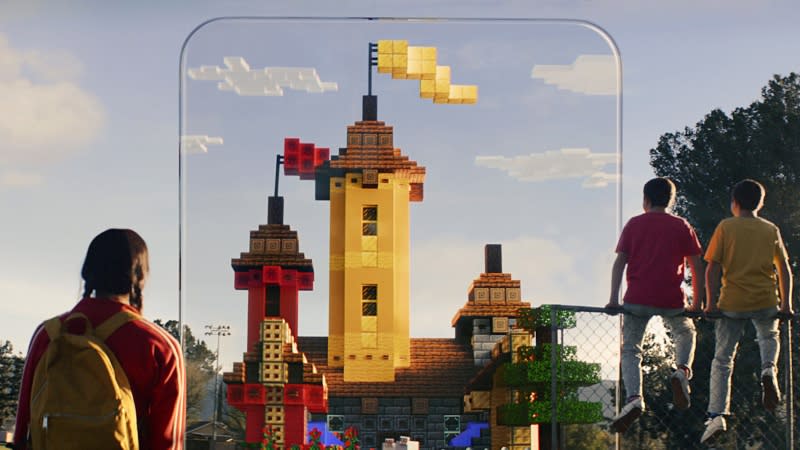
It's an extension of the game that encourages players to create in the real world.'Minecraft Earth' launches in early access this October

Mojang and Microsoft have revealed that the augmented reality game will be available in "early access" for some countries, starting in October. It didn't say which countries or platforms would be included, but the beta has both Android and iOS users.


There's an extra gig of RAM, but not much else new.Apple's seventh-gen iPad gets bigger but keeps the same size battery

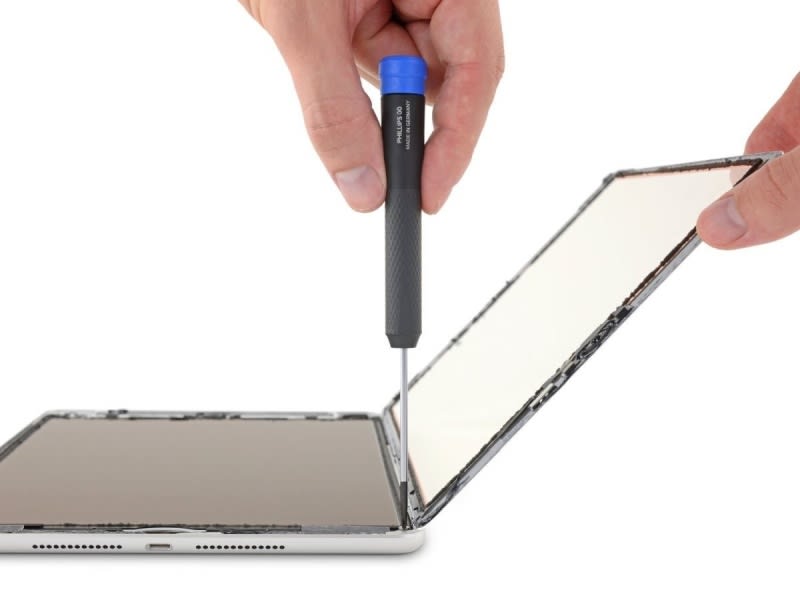
Now in its seventh generation, the "most popular" iPad that Apple sells has grown from 9.7- to 10.2-inches, ships with iPadOS and has a connector to support the company's still-pricey keyboard add-on. The folks at iFixit attacked this new model with their assortment of tools and found that despite the new size, inside it's still very similar to the previous model.

But wait, there's more...


The Morning After is a new daily newsletter from Engadget designed to help you fight off FOMO. Who knows what you'll miss if you don't Subscribe.

Craving even more? Like us on Facebook or Follow us on Twitter.

Have a suggestion on how we can improve The Morning After? Send us a note.

All products recommended by Engadget are selected by our editorial team, independent of our parent company. Some of our stories include affiliate links. If you buy something through one of these links, we may earn an affiliate commission.
Comment
Comments
Share
Tweet
Share
Save

Let's block ads! (Why?)


https://www.engadget.com/2019/09/30/the-morning-after/

2019-09-30 11:10:26Z
52780397522393